
Get a plan made for your unique body and goals
Calorie Counting Diet: A Simple Strategy for Smarter Weight Loss


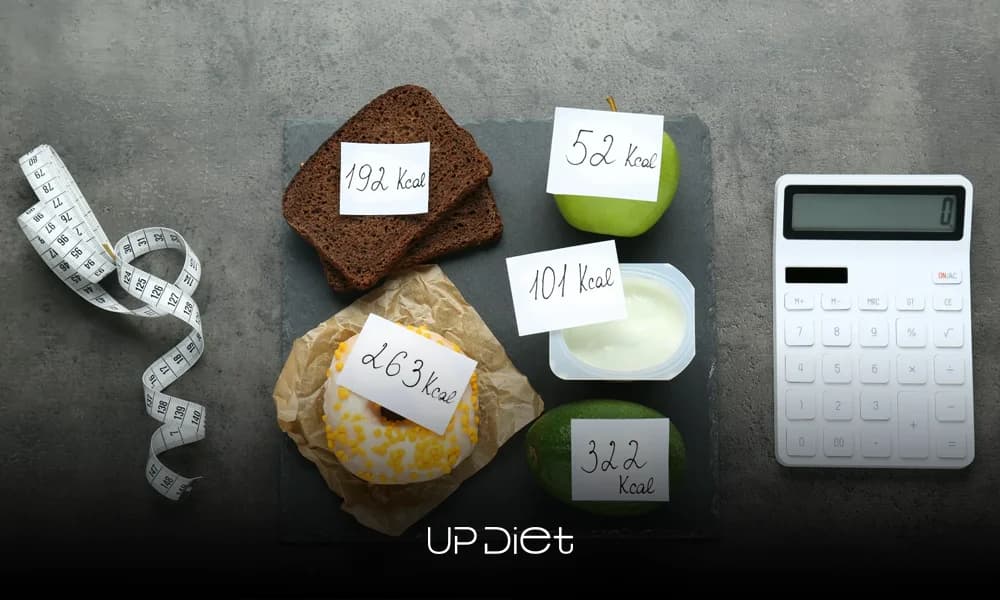
Calorie counting diet is the foundation of all diets, whether you want to lose, gain, or maintain weight. It estimates the calories you need (for a specific goal) and then tracks your intake for staying on target.
We’re talking about a science-based method for weight management, but when done wrong, calorie counting can do more harm than good, and that’s where a calorie counting diet plan comes in.
What Is the Calorie Counting Diet?
A calorie counting diet plan manages food intake by tracking the calories you consume. As an evidence-based, popular diet for weight management, it helps control body weight through energy balance and calorie deficit.
Energy balance refers to the relation between the calories you eat and the calories you burn (for resting metabolism, daily activities, and exercise). When “calories in” equal “calories out”, you’ll maintain the current weight; if calories in are more, you’ll gain weight; and if calories out exceed the intake, you’ll lose weight.
A calorie deficit describes this exact state: when energy intake is less than energy burned. When you are in a calorie deficit, your body uses stored energy (mostly fat), which leads to fat loss and lower body weight. That’s why estimating intake matters so much for sustainable weight loss.
Most of us underestimate our actual intake without measuring portions or logging foods. Without estimating intake, it’s also difficult to know whether weight gain/loss is because of a calorie deficit or something else, like losing water weight or metabolic adaptation.
How Calorie Counting Works
Before counting the calories for changing or maintaining weight, you need to understand your daily energy needs: BMR and TDEE.
BMR (Basal Metabolic Rate) is the number of calories your body burns to support vital functions like breathing, circulation, and organ activity at rest. TDEE (Total Daily Energy Expenditure) is the total calories you burn every day, which is BMR + physical activity and digestion. In other words, TDEE is the calories you need to maintain your current weight.
To create a calorie deficit, your intake needs to be lower than TDEE. You can do this with a calorie counting diet plan or increasing daily movement, or both. For monitoring your intake, you can use tracking applications and nutrition labels.
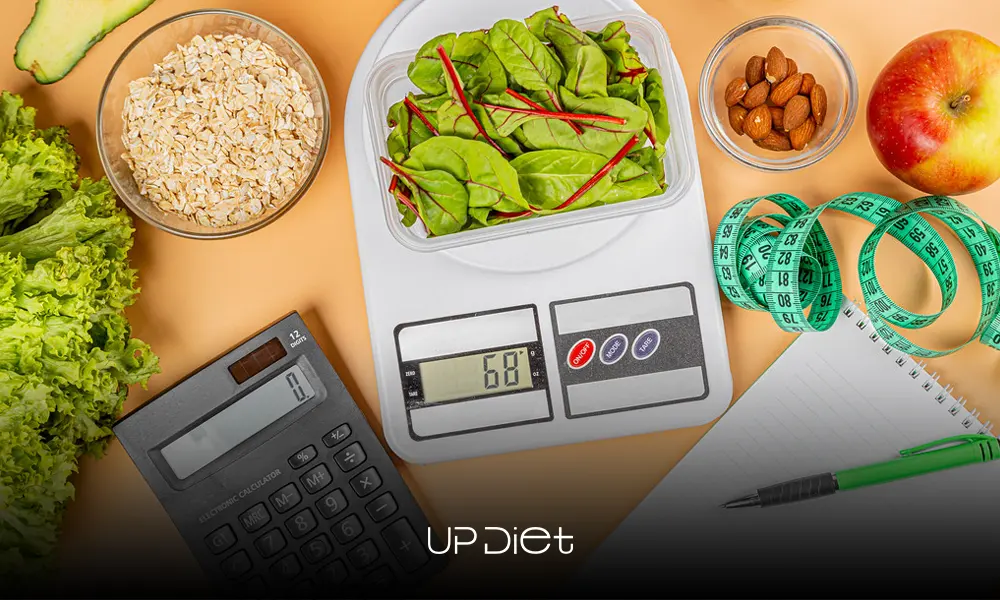
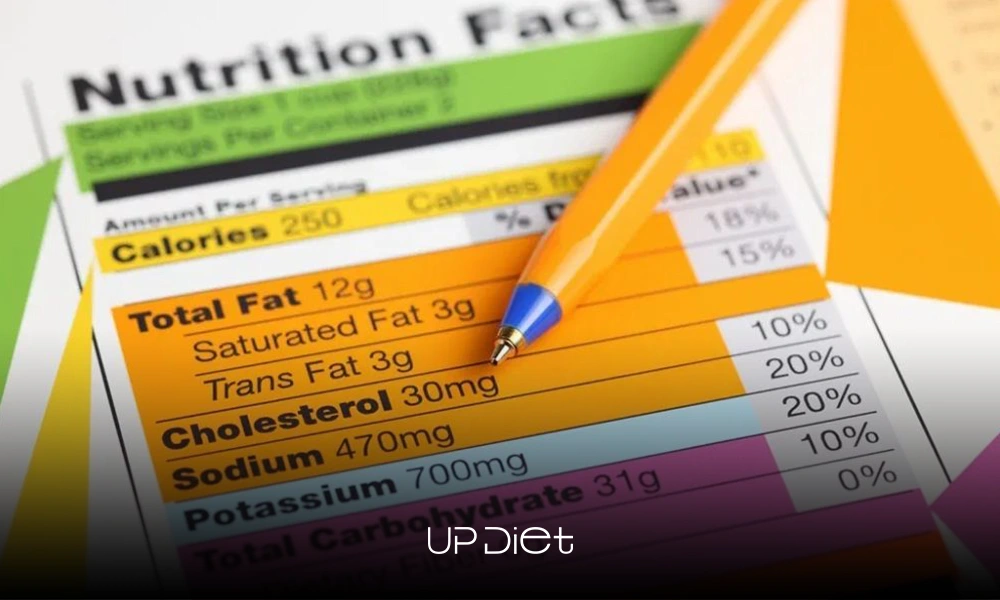
Tracking apps estimate calories by logging foods and portions, helping you compare intake vs. TDEE. They remove guesswork from the process and highlight patterns like frequent snacking or calorie-dense foods. Nutrition labels are useful, too. They provide standardized information per serving, making it easier to accurately estimate your intake.
Calorie Counting Diet Food Guide
In order to reduce your calorie intake, you can either eat smaller portions or choose lower-calorie foods. Low-calorie-density foods are a better option since they have more volume for fewer calories. This way, you’ll keep your intake lower while feeling full for longer:
- Low-calorie fruits: Strawberries, watermelon, kiwi (all ~46 kcal per cup), grapefruit (~57 kcal per ½), cantaloupe (~60 kcal per cup), orange (~70 per one), blueberries (~84 kcal per cup)
- Low-calorie vegetables: Salad and leafy greens, broccoli, carrots, tomato, zucchini, cucumber, cabbage, radishes, celery, and mushrooms are all very low in calories and high in fiber and water
- Lean proteins: Cod/Tilapia (~70 kcal in 3 oz.), scallop (~90 kcal in 3 oz.), skinless chicken/turkey breast (~100 kcal in 3 oz.), salmon (~100 kcal in 3 oz.), cooked lentils (~99 kcal in 3 oz.)
- Whole grains: Cooked oatmeal (~154 kcal per cup), brown rice (~215 kcal per cup), quinoa (~222 kcal per cup), which are more filling than refined grains
- Healthy fats: olive oil (~120 kcal per tbsp), avocado (~80 kcal per ¼), unsalted nuts (~220 kcal per ¼ cup). They support nutrient absorption and satiety, but they’re also calorie-dense and must be consumed in small to moderate portions
- Dairy: low-fat, plain cottage cheese (~90 kcal per ½ cup) and Greek yogurt (~88 kcal per ½ cup)
Calorie counting diet plans are filled with these low-calorie, high-volume, nutrient-dense foods. What they avoid are high-calorie density foods with lower nutrients that quickly digest and make you hungry again. These foods include:
- High-sugar snacks and desserts: Candy and chocolate bars, cakes, cookies, sugary drinks, fruit juice
- Fried and processed foods: Fried snacks like chips, fast food meals, high-fat condiments like mayonnaise, and creamy dressings
- High-fat animal/dairy products: Bacon, sausages, fatty cuts of meat, butter, cream, full-fat cheese
- Calorie-dense carbs: Dried fruits, refined baked goods (white bread, pastries)

Benefits of the Calorie Counting Diet
Calorie counting diets have several benefits for your mind and body, without forcing fixed or strict rules:
- It improves your awareness of your eating habits. Tracking calories helps you become more conscious of what and how much you eat, as well as hidden patterns like repeated snacking or oversized portions that significantly increase energy intake.
- It manages your food portions. By logging foods and their amounts, calorie counting indirectly makes you pay attention to portion sizes. Portion control prevents you from underestimating your total intake and overeating.
- It has flexible food choices. A calorie counting diet plan doesn’t eliminate any food groups. You can include diverse foods based on lifestyle and/or preferences, as long as total calories align with your goals.
- It’s an evidence-backed method for losing weight. Scientific reviews and research show that recording dietary intake is linked to weight loss, as it helps create and maintain a calorie deficit. They also note that self-monitoring is one of the strongest predictors of successful weight loss in behavior-based programs.
- It supports better brain functions. According to a NIH Bookshelf entry, reducing body weight by less calorie intake (and more activity) supports brain health, too. Caloric restriction also helps prevent Alzheimer’s and declines in memory or learning (via reducing oxidative stress on the brain).
Common Mistakes People Make
There are a few common errors that lead you to think you’re in a deficit when you’re not. These pitfalls make tracking less accurate and undermine weight-loss efforts, for example:
- Underestimating calories: As mentioned earlier, it’s quite easy to underestimate calories, especially when you guess portions instead of measuring them. Research also shows that self-reported calorie intake (in food quantity and calories) can be off by a large margin.
- Ignoring liquid calories: A lot of people don’t log quick-to-drink liquid calories like juices, sugary drinks, coffee drinks, alcohol, and smoothies; even though they add significant energy.
- Not measuring portions accurately: Not weighing or measuring food equals inaccurate calorie tracking. Visually measuring servings often results in eating much more than logged.
- Overlooking snacks, condiments, and extras: Calorie counting diet plan counts everything; small bites, condiments, dressings, cooking oils, sauces, snacks, and even healthy additions (like nuts and seeds). Most people don’t track them, but they add up quickly and ruin a calorie deficit.
- Relying on inaccurate labels: Food labels and database entries can be up to 20% off or user-generated and incorrect. Misreading labels or trusting generic entries without cross-checking can mess up calorie tracking.
- Overestimating calorie expenditure: This is the opposite of underestimating calories but has the same effect. Many people overestimate the calories they burn with exercise and then eat more because of that assumption.
- Eliminating too many foods: Calorie counting diets don’t promote eliminating specific food groups. It has flexibility so you can enjoy your favorite foods and satisfy cravings, which is a crucial factor for long-term adherence.
- Eating too little: Aggressive calorie deficits only increase hunger, fatigue, and loss of lean mass. They may also lead to nutrient inadequacy, rebound binge eating, or even dropping the diet.
- Focusing only on calories: Some individuals treat all calories as equal and choose low-calorie but nutrient-poor foods. This type of calorie counting also results in weight change, but can also lead to deficiencies or poor satiety.
Risks and Limitations
Calorie counting is effective, true. But there are clear limitations when not applied correctly, for instance:
- Risk of nutrient deficiencies: Focusing strictly on calorie count can lead to choosing low-calorie but nutrient-poor foods (especially when the calorie target is too low or food variety is limited). This means inadequate intake of fiber, vitamins, minerals, essential fatty acids, and their essential nutrients.
- Obsessive tracking: Accurate tracking is recommended; it shouldn’t turn into an unhealthy obsession to log every bite or anxiety about untracked foods. This will eliminate the joy of eating and make long-term commitment less likely.
- Very low-calorie dieting: Extremely low intake causes fatigue, lean mass loss, hormonal disruption, and difficulty sustaining weight loss over time. This isn’t a safe choice, and research advises not to try it without medical supervision.
- Limited focus on food quality: Unlike a calorie counting diet plan, calorie tracking alone doesn’t distinguish between nutrient-dense and ultra-processed foods. Healthy options are vital for diet quality; not getting enough macro/micronutrients may damage metabolic health and cause early hunger.
Keep in mind that calorie counting works best when it is paired with balanced meals, mindful eating, and hunger awareness. Steer clear of extreme restriction or perfectionism, and use calorie tracking as a guideline, not an inflexible rule.
How to Start a Calorie Counting Diet Plan
Here’s a step-by-step guide on how to –safely and effectively– start a calorie counting plan:
- Calculate your calorie target: Use a calorie calculator or app to estimate your TDEE based on your age, sex, weight, activity level, and goals. If you want to lose weight, aim for a moderate calorie deficit (typically 10-20% less than your TDEE).
- Log your meals: Start tracking everything you eat, including drinks, snacks, and condiments. Use a food diary or a calorie tracking app to make logging easier and more accurate.
- Prioritize nutrient-dense foods. Focus on whole, minimally processed, nutritious foods like vegetables, lean proteins, whole grains, and healthy fats.
- Manage ingredient portions: Use measuring cups, a food scale, or visual guides to avoid overestimating your food portions. Be mindful of liquid calories from drinks and condiments, too.
- Adjust calories gradually: If weight loss stalls, reduce your intake slowly (50-100 calories/day, for instance). Don’t make drastic cuts to prevent metabolic slowdown and muscle loss. Calorie needs decrease with weight loss, and you’ll need to recalculate TDEE.
- Track weekly trends, not daily fluctuations. Don’t let daily weight fluctuations discourage you from calorie counting diet plans. They could be due to water retention, digestion, the menstrual cycle, or other factors. Focus on weekly results to measure progress.

Final Thoughts
Calorie counting is a straightforward way to manage weight because it focuses on energy balance. When done correctly (without extreme restriction), it creates a consistent deficit that leads to gradual, sustainable weight loss with zero side effects. The added bonus is that it works with a variety of foods and lifestyles, too.




- In this post:
- What Is the Calorie Counting Diet?
- How Calorie Counting Works
- Calorie Counting Diet Food Guide
- Benefits of the Calorie Counting Diet
- Common Mistakes People Make
- Risks and Limitations
- How to Start a Calorie Counting Diet Plan
- Final Thoughts